

A small river is the best classroom in fishing. The water is close, the fish are close, and your mistakes are close enough to see and fix. But before you spend a season untangling line, it's worth knowing which tool suits you better: a spinning rod or a fly rod. Both catch fish on small rivers. They just ask different things of you.
Start With the Water, Not the Rod
When people say "small river," they usually mean something you can wade across in a few strides, maybe 15 to 40 feet wide, with a mix of riffles, pools, and undercut banks. Trees crowd the edges. There's rarely room for a long backcast.
That setting matters more than the brand of rod you buy. On water this size, most casts are 15 to 30 feet. Accuracy beats distance every time. You're often fishing a pocket the size of a bathtub, trying to drop something in it before the current drags your offering into the riffle below.
Both styles can do that. The difference is how the lure gets there.
Spinning Tackle: The Shortest Path to a Fish
Spinning gear is the forgiving option. The weight of the lure pulls line off the spool, so casting is mostly a matter of loading the rod and letting go. Most people make a usable cast within an hour or two, and a decent one the same week.
A small-river spinning setup usually looks like this:
- A 5'6" to 7' light or ultralight rod — short enough to cast sidearm under branches
- A 1000 to 2500 size reel
- 4 to 8 lb monofilament, or braid with a short leader if you prefer sensitivity
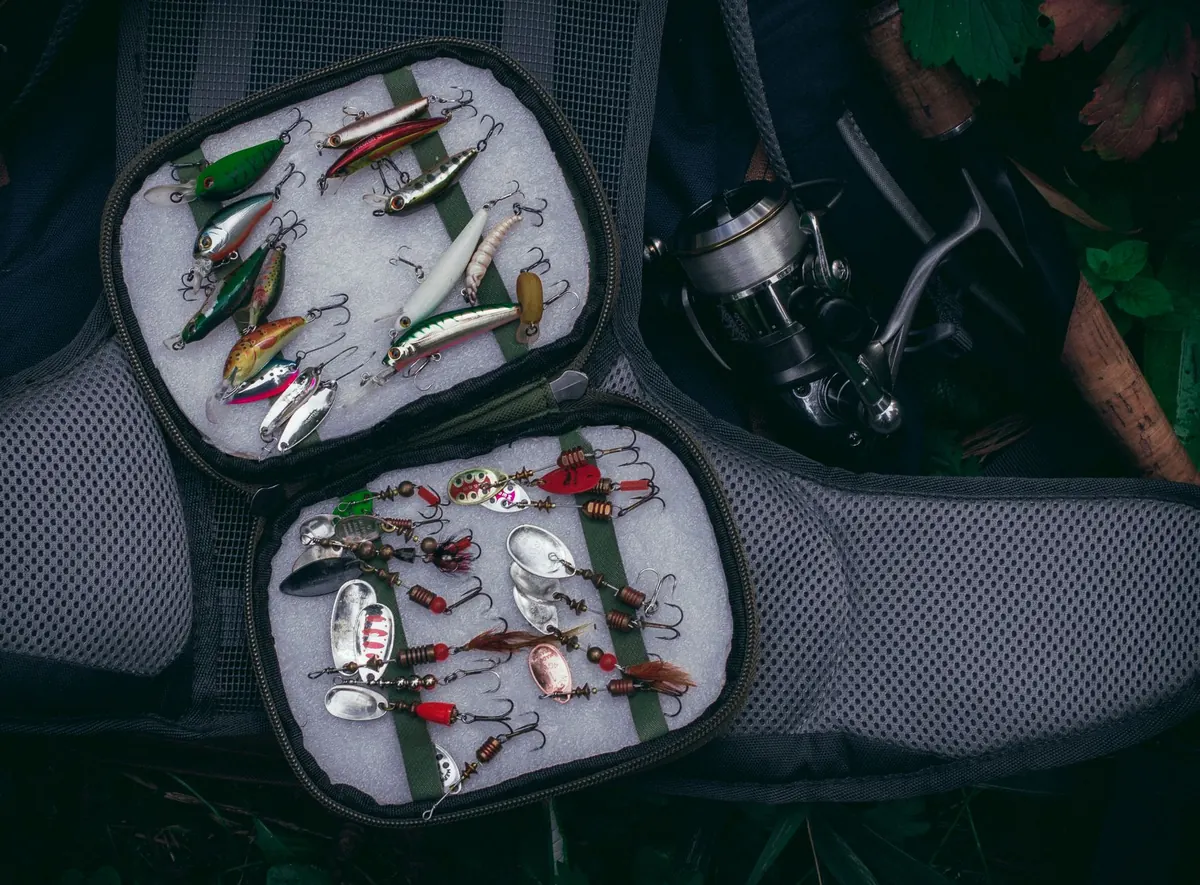
- A handful of 1/16 to 1/4 oz lures: inline spinners, tiny crankbaits, small jigs, soft plastics
Sidearm and underhand casts keep you out of the trees, and you can fish a lure through a run at almost any angle. When a fish hits, the rod does most of the work — you just keep the line tight and let the drag handle the rest.
The trade-off is presentation. A spinner or crankbait moves on your terms, not the current's. On heavily pressured water, fish that see the same hardware every weekend get educated fast.
Fly Fishing: More to Learn, More Control
Fly fishing flips the physics. There's no lure weight to carry the line, so you're casting the line itself. That's why the first few outings feel clumsy and why the payoff, once it clicks, is real control over where a nearly weightless fly lands and how it drifts.
A sensible small-river outfit is a 9-foot 5-weight for general trout work, or a shorter 7'6" to 8-foot 4-weight if your river is a tunnel of alders. Add a weight-forward floating line, a tapered leader, and a few flies — a couple of nymphs, a couple of dry flies, and a streamer or woolly bugger.
The first month, realistically
Plan on lawn practice before water. Ten or twenty minutes at a time, no more. Start with 20-foot casts and stop when your arm gets tired, because tired arms teach bad habits. Learn two casts that matter more than the pretty one:
- The roll cast — for when brush blocks your backcast and you still need to reach the far seam
- The bow-and-arrow cast — for flicking a fly into a tight pocket under overhanging branches
Then the real skill: the drift. Trout take a fly when it moves like nothing at all. Getting a drag-free drift through a small pocket takes more practice than the casting does.
If your fly is dragging, use your line hand to feed slack, or step one pace upstream and try again. Small rivers reward small adjustments more than perfect technique.
What Each Approach Really Costs
Entry-level spinning combos are the cheapest way onto a small river, and you can be fishing the same afternoon. Fly fishing has more separate pieces to buy, and the line itself is a real expense — a single quality fly line can cost about as much as a whole beginner spinning outfit.
Beyond the rod and reel, both paths involve optional but useful spending:
- Shared: license, small tackle box, polarized sunglasses, nippers, a landing net
- Spinning-specific: a range of lure weights and styles, spare spools of line
- Fly-specific: leaders, tippet, floatant, flies (which you will lose, regularly), and a vest or pack to carry it all
Waders are nice in spring and fall, but in summer you can wet-wade in shorts and old sneakers on many rivers. That's a fine way to start, and it keeps the first season cheap. Buy used if you can — fly rods in particular hold up well and get resold often.
Wherever you fish, check your local regulations first. Some small rivers are fly-and-lure only, some restrict bait, and seasons and limits vary by water. Confirm current rules with your state or provincial wildlife agency before your first cast.
Learning Curve: Weeks Versus Minutes
Spinning lets you catch fish while you're still learning. You'll lose fewer lures, spend less time fixing tangles, and be able to hand the rod to a friend or a kid without a lesson.
Fly fishing asks for patience and then gives it back with interest. The first trip or two can be genuinely frustrating. By the end of a season, though, you'll be able to land a size 16 dry fly under a branch, drift it drag-free through a seam, and set the hook on a rise you saw coming. That's a specific, satisfying kind of control that a spinner doesn't offer.
If you like tinkering, reading water, and matching what insects are doing, the fly rod will hold your attention longer. If you'd rather cover water, cast hard, and see what's willing, spinning stays fun for decades.
Species and Situations
On cold, clear trout streams, fly fishing often has the edge — especially on water that gets fished hard. Trout that refuse a spinner will sometimes take a small nymph drifted naturally.
Spinning shines on warmer, more varied rivers. Smallmouth bass, panfish, chub, and fallfish all respond well to small spinners, jigs, and topwater lures. In summer, a tiny popper walked across a pool at dusk is about as much fun as small-river fishing gets.
A rough guide:
- Wild or pressured trout, clear low water: fly
- Stocked trout, high or off-color water: either, with an edge to spinning
- Smallmouth and panfish: spinning, though streamers and poppers work too
- Tight brush, no backcast room: spinning is easier; fly works if you roll cast
How to Choose Without Regret
If you want to catch fish on your first three trips and keep the gear budget small, buy a light spinning outfit. Learn to read seams and pools with it. Those skills transfer directly to a fly rod later.
If you're drawn to the craft — the casting, the insects, the slow puzzle of a drift — start with a 9-foot 5-weight and a few basic flies. Take one lesson or watch a good casting video, then practice on grass until 25 feet feels natural.
And if you can, borrow before you buy. Most fly anglers are happy to hand someone a rod for an afternoon, and a single outing will tell you more about which style fits you than any comparison on a screen. Either way, pick a short stretch of river, fish it often, and pay attention. Small water teaches quickly when you show up.
Photo: Nataly Grb / Pexels
Related posts
More stories you’ll love reading